“Contemplation is the highest expression of man’s intellectual and spiritual life. It is that life itself, fully awake, fully active, fully aware that it is alive.”
2,898 communities of monks and nuns in 92 countries. 134 of them need help to keep going.
In 2018 the nuns began an EU-funded project, 'Wirydarze dziedzictwa benedyktyńskiego', to convert historic buildings into a museum, library and reading room. They say costs rose by about 150% after COVID-19 and the war in Ukraine, and an audit has now required the project to be settled by December 2026 instead of 2027. They are asking for 4 million PLN to finish it; if it is not settled on time the grant must be repaid with interest from 2018, which they say would be practically impossible for the abbey.
The Définitoire was damaged by fire in the 19th century, is largely disused and is described by the Fondation du patrimoine as in a state of peril; walls and roof come first. Once saved it is to house a study and research center holding the archives of the order, plus exhibition space. Works began in March 2025 and the donation drive is under half way to its target.
The whole complex is for sale and must be restored from top to bottom; the estate agent describes it as 'à réhabiliter entièrement'. It is the cheapest monastic building found in France: the price of a flat buys a protected 17th-century convent with its cloister and chapel choir. A buyer could return it to religious use or simply keep it standing.
On the morning of 2 November 2025 a fire gutted the main building, leaving only walls and a few vaults and destroying the original timber roof and painted beams. The owners first need to protect the exposed masonry, then rebuild frame and roof. Insurance is capped, so the Fondation du patrimoine opened an emergency collection.
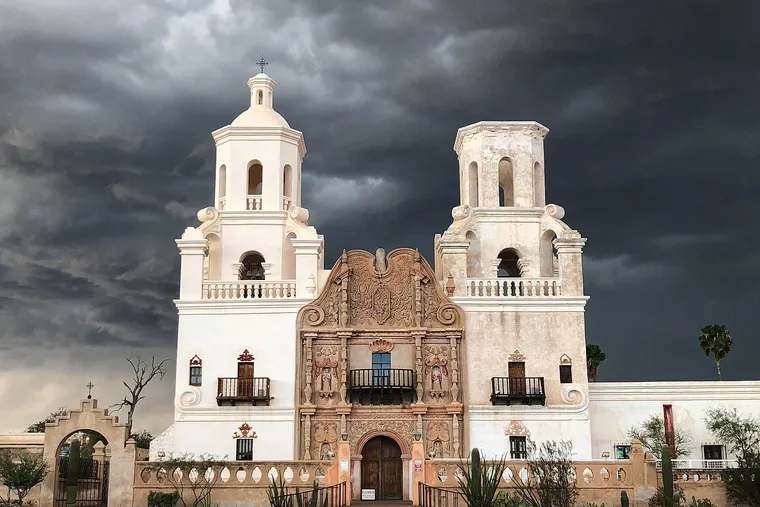
Cement plaster applied in the mid-twentieth century trapped moisture and damaged the decorated facade; conservators are removing it and stabilizing the original plaster in seasonal phases, with later phases to replace lost columns and the balcony. The Spring 2026 newsletter adds that the Convento and Granjon wings need foundation reinforcement, adobe wall rehabilitation, new water and electrical systems, treatment of insect-damaged mesquite beams and hazardous-material abatement. Donations to Patronato San Xavier pay for the conservation team, outside experts and the next stages of work.
About 200 timber ceiling beams in the first floor of the cloister are failing from age, damp and wood-boring insects; many must be replaced and the rest treated. The 'Apadrina una viga' (sponsor a beam) appeal prices each beam at 300 euros.
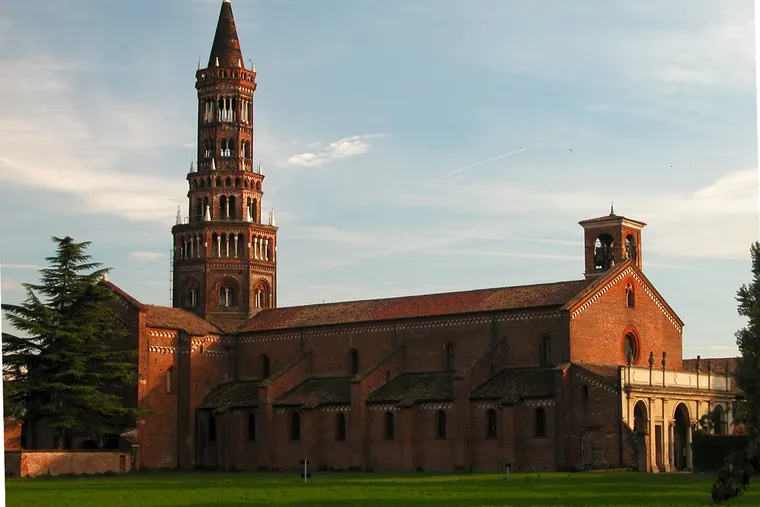
The roofs of the abbey church are degraded: tile courses are irregular and water is getting in and damaging the frescoes inside. The monks' official Art Bonus sheet prices the roof works at just over EUR 1.02 million, of which about EUR 205,550 has been donated; a second open project restores the 16th-century entrance tower.
The Agenzia del Demanio is offering it on a 6- to 50-year 'concessione di valorizzazione' to whoever presents the best project to restore and reuse it for cultural, social, civic or tourism purposes that keep it open to the public. There is no base price, only a symbolic minimum annual fee; the concessionaire funds the restoration.
The church bell tower is leaking badly: a buttress is crumbling, plants are growing on the tower and the stained glass lets wind and rain into the choir. The planned work covers waterproofing, masonry, the belfry, a full new roof and repair of the elevations, buttresses and windows.
The basilica has never had a major renovation: its 3,500 m² of roofs carry slates nearly 150 years old, and the cornices, downpipes and zinc and lead work are worn out, with damp and cracks reported. The monks' 'Basilique 2030' project restores the whole exterior (134,000 slates to replace, 6,000 m² of façade) before a later interior phase. Donations go through a dedicated King Baudouin Foundation fund or a 5-euro 'sponsor a slate' page.
The canons' restoration program covers the bell tower, the partly destroyed Gothic abbey church and other historic buildings. The south transept was finished in December 2025; restoration of the side aisle is ready to start, while a dig is awaited for the archaeologically sensitive façade. The program began in 2018 and is expected to run until at least 2029.
A large vertical crack in a rammed-earth wall that faces the street has been growing and points to a serious structural problem. The appeal helps to pay for making the wall safe.
Termites were detected inside the polychrome wooden altarpiece of the convent church a few weeks before the appeal opened in late September 2026. The appeal pays for a bait-and-trap treatment planned over four years to eradicate the colony.
The building is in poor condition and the sisters are forced into continual repairs. The appeal pays for works to cure the damp in ceilings and walls, described as needing urgent intervention.
The ground under the building, which sits on a layer of clay, is moving and the foundations are failing: large vertical and horizontal cracks are opening in the central range of the convent. The appeal pays for urgent structural reinforcement.
Roof repair is the monastery's stated priority. The roofs cover close to 2,000 square meters, with vegetation growing and broken tiles letting in water; the community asks for urgent help with part of the cost of cleaning the roofs, gutters and downpipes, replacing broken tiles and fixing the rest in place.
The community lives mainly from the sweets it bakes. In the middle of the Christmas baking season a gas explosion inside its only oven destroyed it, and without a replacement the nuns cannot work. The appeal covers part of the cost of a new oven.
The nuns face urgent works: repairing the perimeter wall, rebuilding the steps down to the kitchen garden and removing fallen trees. The appeal helps to pay for them.
In autumn 2026 the sisters ended their 71-year altar bread distribution, a long-time source of income, because the work had become too heavy for them. At the same time the inverter on their solar array failed and their electricity bills surged. Their Fall 2026 appeal asks for $17,000: $9,000 to replace the inverter and $8,000 for a five-year maintenance contract on the array.
Wildfires forced the monks to evacuate in August 2026, and the hermitage is closed through the winter of 2026-27, with no monks in residence and no retreat guests. The property and its systems still have to be maintained, the two-mile access road needs constant costly repair (the hermitage keeps a road maintenance fund), and the monks are at the same time reviewing whether their small, aging California communities are sustainable. The hermitage says most of its monthly needs are met by donations.
A severe storm on 20 October 2026 destroyed the whole roof of the building where the sisters receive groups (a hall for more than 100 people, kitchen, dining room and toilets). The roof must be replaced and the floor, damaged by falling roofing, repaired. The order has asked for donations on the sisters' behalf.
The community's own appeal says the house is being seriously undermined by water getting in through the disintegrating lime render, and that roofs and chimneys need work; in February 2026 the Irish Examiner reported that the building needs extensive repairs, including re-rendering of the exterior walls. Help would go to these repairs to the house where the six nuns live and pray.
The monks are renovating the guest house (Casa Ospiti) to meet safety rules: removing architectural barriers, new visitor toilets and a bathroom for each room. The Art Bonus sheet lists a EUR 400,000 project with works in progress; spending so far has outrun the donations received.
A ruined building in the convent orchard, beside a central city street, is shored up, damp and at risk of collapse. The appeal funds its urgent repair.
Water filtering in from the neighboring patio has damaged the foundations of a wall in the novitiate wing of this 16th-century listed convent. The appeal pays for the repair.
The complex has long-standing conservation problems made worse by the 2012 earthquake. The friars are consolidating and restoring the Chiostro dei Morti: the Crucifixion fresco, columns, capitals and terracotta, the plaster, the cistern and drains and the paving. Works began in January 2026 and spending has already exceeded donations.
Masonry is coming loose from the cornice of the convent tower and pieces sometimes fall into a busy pedestrian street. The money pays for urgent repair and consolidation of the tower.
The 'Patersgang', the private wing where the friars live, is outdated and its electrical installation was recently condemned. The friars want to turn the old cells into nine modern rooms with their own sanitation so the house can receive novices and theology students. They are raising 800,000 euros through a heritage account managed by Herita.
The friars say that with limited funds they do only what is essential each year. Their 2026 list of needs includes finishing sanitary facilities for pilgrims in the east wing, starting the reconstruction of the west wing for the brothers and later for sisters and pilgrims, a new boiler room, eight lunette windows in the cloister corridor and refurbished doors.
The living monastery is leaking: the priorities set in September 2025 are waterproofing the 12th-century refectory, the adjoining buildings and the gallery along the cemetery, and a cracked cloister pillar. The brothers have already relaid over 100 square meters of waterproofing themselves and had the whole monastery scanned for the architect.
The Poor Clares, whose foundation dates from 1503, are opening a house of prayer in part of the monastery to receive individuals and groups looking for silence. They have already paid much of the cost of fitting it out and ask for help with the rest.
Tiles have been falling from the roof of the great nave; a net under the frame and a hoarding on the ground keep people out of danger. Water is damaging walls, floors, stucco, vaults and timbers. After delays the roof works started in February 2026: about 750 square meters of roofing over the nave, porch and annexes.
The roof of the north wing, above a library of about 70,000 books, is full of holes; after storm Ciaran in November 2023 thirty buckets were catching water between the shelves. All 600 square meters of slate must be relaid and the attic fitted out for the archives. The first phase is planned for spring 2027 and the State's share came in lower than announced.
The east wing, built by the Maurists in 1688 and still holding most of the monks' cells, has been structurally unstable since at least 2000 and new cracks keep appearing. Restoring the existing building is put at about 2 million euros. The rebuilt wing will also hold a proper library and an infirmary so that old and sick brothers can stay in the abbey.
The monks are asking for donations to furnish the Chapel of the Holy Family in their guest house, in solid wood using traditional craft techniques, with the brothers making the main altar themselves. The plan put the oak pews in 2025 (the abbey reported the first half installed), and new solid-oak doors went in in August 2026; the 2027 stage covers side altars, painted-glass windows and remaining furnishings, with completion and blessing planned for 2028.
The abbey is carrying out a restoration of its very large complex in four stages from 2022 to 2027, and says parts of the buildings were at risk of collapse and unusable. The first stage, the empty east tract, was planned for 2022 to early 2024; the abbey church was finished and re-blessed on 21 March 2025. The stage described in its 2025 newsletter adds five guest rooms, renews the monks' rooms and restores the St Agatha chapel. The abbey says it receives no church-tax money, that its own funds and public grants cover only part of the cost, and that it is collecting donations for the rest.
The nuns are raising money to open a museum for the work of Mother Geneviève Gallois, a Benedictine artist; about 8,400 of her works are kept between the abbeys of Limon and Jouques. The whole project costs nearly 200,000 euros, of which 80,000 is sought from the public.
The basilica's great organ needs restoration; earlier maintenance was always paid for by the monastic community. An Art Bonus collection is open for a project costed at EUR 174,840, of which about EUR 21,500 had been given by the end of October 2026.
The community says it is at capacity in its present building and tiny temporary chapel and is running out of room for new vocations, while the 1960s ranch house that holds the chapel is deteriorating. Ground was broken on 5 June 2026 for phase two, a two-story living-quarters building of about 30,000 square feet bringing capacity to 70 sisters; phase three is a permanent monastic church. Gifts go to the 'Help Us Build' fund, including a 'One Day Wage' appeal.
The nuns are building a complete monastery in traditional stone masonry and timber framing, meant to last for centuries. Work began in 2013 and is about one fifth complete; the oratory, dedicated in 2024, serves as a temporary chapel while the permanent church is built, and the plans also include a refectory, a novitiate (groundbreaking in autumn 2025) and quarters for the professed nuns.
The monastery needs a run of repairs: two failing water heaters (about 11,000 dollars), a garden well filtration system (about 11,000 dollars), weather-damaged eaves and entry pillars, roofing, and remodelled bathrooms with roll-in showers and grab bars for sisters who have grown elderly and infirm. The fund has barely started.
Every hermitage is occupied and the community's small private chapel no longer holds it, so men waiting to enter cannot be received. A public chapel designed by Duncan Stroik, seating 44 guests, is under construction (OSV News gave the start as autumn 2022, the prior as 2023); Archbishop Bernard Hebda blessed its cornerstone on 14 September 2025. In May 2025 the prior said about $3 million had been raised and another $2 million to $3 million was needed to complete the chapel substantially, hoped for in 2026; four more hermitages are to follow.
The monastery has been under construction since 2014 on land bought near Meeteetse in 2010, and the monks now live there, having sold their first monastery at Clark. The work is now concentrated on the main chapel: the apse vault was reported complete in July 2026 and the monks are carving and setting its granite. The New Mount Carmel Foundation collects donations for the building; each phase is built only when fully funded, so there is no debt.
The monks have completed two large buildings and part of their abbey church and are asking for help to continue. In October 2026 a construction crane arrived to raise the church walls to full height over the next few years, the temporary roof in place for more than a decade is being removed, and preparatory work has begun on the south wing.
The 'Faithful Stewards' mini-campaign addresses facility needs planned for the next two years: replacing the basilica's heating and cooling system, replacing the outer glass that protects its stained-glass windows, and new HVAC components in the seminary's St. Maur Hall. The abbey says the aging systems cause condensation and humidity that put the historic murals, artwork and pipe organ at risk.
The first phase of building, about $2 million for the renovated residence, bell tower and walkway, was finished in December 2025. The second phase is a chapel for 70 people and a six-suite guest house, estimated at $6 million to $7 million; the sisters hope to raise about $1 million before starting and to break ground at the end of 2026. Guest fees from the house are meant to help support the community.
The nuns are raising money to conserve the pulpit in the nave of their shrine church, which experts say urgently needs conservation; the organ was restored in recent years. A 70,000 zł grant from the Silesian regional government and about 110,000 zł saved from donations since 2023 leave 80,000 zł still to find. They also expect to need about 155,000 zł to replace the central-heating boiler.
The community broke ground on 16 September 2026 on a single-level guest and wellness wing joined to the main building: four double rooms with private baths so that aging monastic members can stay in the monastery and guests with limited mobility can reach the chapel, meals and conferences. The goal is $1 million; $700,000 had been raised by October 2026, leaving about $250,000 to $300,000 to find.
(1) Baking sweets is the community's main work, and the cutting machine used in the bakery stopped working; it can be repaired but the cost is high. The appeal covers part of that cost. (2) Part of the monastery wall facing the street is damaged by damp coming from the patio. The money pays for draining the patio and making the wall sound.
The part of the monastery used as a spirituality center is in very poor condition. The appeal pays for refurbishing the rooms, enlarging the bathrooms and replacing the old electrical installation.
The brothers' church, a few meters from the cathedral of Santiago, needs a new sound system so that the liturgy can be heard. The appeal pays for its installation.
The community has outgrown its building. It plans a public Chapel of the Holy Face of Jesus seating about 150, designed around seven stained-glass windows rescued from a burned Chicago church, with a nuns' choir, nine new cells, library, chaplain's quarters, renovated infirmary and a cemetery: about 17,000 square feet of additions for up to 21 nuns.
The appeal is made by the Conceptionist Federación Bética de Santa María de Guadalupe, not for this house alone: it pays for a month-long formation course for 25 novices and junior sisters from 21 monasteries of the federation.
After restoring the west front and the chapel, the nuns are now tackling the east front of the four-story conventual building: twelve double-glazed window frames and thirty-nine pairs of shutters. It is a small job that keeps the building habitable and open to visitors.
The community is receiving postulants, but the novitiate cells need new windows, doors, cupboards and floors. The appeal pays for fitting out four cells.
After emergency work on a cracked façade in 2015 and the restoration of façades and roofs, the association Batificat is now replacing all the windows to cut energy use, starting with those on the rue Bourg-l'Abbé, and creating six social-housing flats.
Their historic house has uneven floors and stairs, an unusable basement with damp and asbestos, and cannot be adapted for sisters with mobility problems; the surrounding Highlands district has filled with bars and late-night noise. A benefactor gave land at Byers and a new monastery for up to 13 sisters is under construction: in August 2025 the main structure was being framed and completion was expected within the coming year. Donors can direct gifts to the building fund or to the sisters' general support, and naming opportunities from $1,000 to $1 million are still open.
The monks are fitting out cells and bathrooms accessible to disabled brothers: an adapted room costs 15,000 euros and an equipped bathroom 25,000 euros.
For 2026 the monks are running the Abbot Paulinus Silver Jubilee Thanksgiving Appeal, aiming to raise £6,000 to fund six months of accompanying young men from poorer parts of South America who are discerning a Benedictine vocation (travel, pastoral visits and practical support), so that poverty does not decide whether someone can test a vocation.
A capital campaign is paying for a permanent public chapel and nuns' choir and for finishing the parts of the monastery left incomplete or temporarily repurposed in 2008. The Phase II construction contract was signed in 2025, Bishop Burbidge broke ground on 19 July 2025, and the chapel was under construction in autumn 2026. The monastery's website still says funds are needed to ensure the project is fully funded, and the Fall 2026 newsletter invites memorial gifts to the Chapel building fund.
Part of the roof of the north-west wing is covered in asbestos-cement sheets that must be removed, with some of the timbers beneath in poor condition. The works total about 1.1 million euros; the public collection is close to its 75,000-euro target and the sisters say the works are what allows them to stay.
The main rebuilding is done. The monks' donations page says that 'some construction-related costs remain' and that they are launching new projects, and invites benefactors to write for details. Gifts go to the monastery directly or through its US, UK and EU support bodies.
The Friars is an independent charity that says it is not financially supported by the Catholic Church and costs over 2,000 pounds a day to keep open. A chapel roof repair program estimated at 350,000 pounds has begun, on top of continuous repairs to the medieval and modern buildings. Its 2024 accounts say the estate is too large to be maintained from local income alone.
A non-denominational foundation set up in 1969 raises the money to restore and maintain the complex, because the convent could not afford to. The foundation says it depends on financial support to care for the heritage, and that current donations go to restoring the wall paintings in the convent church.
Termites are reducing the choir stalls where the nuns pray the Divine Office to dust, and parts are already unusable; damp in the outer walls also risks pieces falling into the street. The appeal pays for treating and restoring the choir and repairing the outer walls.
The friars' own case for support says the basilica is in critical need of preservation and at risk of irreversible damage, with active water infiltration, structural weaknesses and no proper facilities for aging friars. A 2022 Historic Preservation Masterplan sets out stabilization of the basilica, monastery and seminary (drainage, roofs, domes, masonry, windows), then full interior restoration, including an $11.6 million renovation of the monastery with an infirmary wing.
In its case statement the mission said it receives no state or federal funds and no financial support from the Church, and that about 85% of its operating income comes from museum tours, the gift shop and venue rentals. Its Restore and Renew campaign lists restoration of the historic roof woodwork and tiles, a study of disintegration in the church walls, a new elevator and alarm system, conservation of the lavanderia, fountains and cemetery monuments, and preservation of historic structures and the friars' living areas.
Stones fell from the top of the choir vaults in 2019 and a safety perimeter was set up; architects warned the stonework could collapse beyond repair. Emergency works began in late 2022 and full consolidation is forecast to finish in 2027. The congregation wants to hold services among the ruins again.
The abbey's 'Two Abbeys Project' aims to secure both the modern abbey and the medieval ruins before the 900th anniversary in 2032. It lists repairs to church windows and roof leadwork, a full repair of the Old House roof, then the cloister ranges and guesthouse, and consolidation of the ruins; grants require match funding the monks must find. The abbey says running costs exceed 1 million pounds a year and that a guesthouse refurbishment is planned.
The abbot's appeal says the exterior mortar of the abbey church has loosened and disintegrated over seventy or more years, and professional assessments have documented rising moisture inside the building. Water intrusion threatens the structure and the de Wit murals on the interior walls; donations pay for waterproofing and sealing the church exterior.
The monks live in strict poverty and say the community has no income, while the maintenance of so extensive a monastery is costly. Donations support the community's daily upkeep and the building works around the monastery, above all the restoration of Parknowle, a listed building the monks describe as having been on the brink of collapse; in August 2025 they said they needed over £1 million to complete its exterior and refurbish the interior.
A crowdfunding appeal launched for the millennium asks for EUR 30,000 to finish restoring the frescoes of the chapter room and to protect them for the future, including replacing the windows.
The sisters must pay £2.5 million to Stanbrook Abbey to buy Colwich Abbey and its grounds, then meet extensive repair and updating costs and refurnish a house whose contents were auctioned, before installing a high altar and space for the faithful at Mass. They are doing much of the work themselves but say professional builders will be needed, while their order is also funding two building projects in the United States.
The hermitage is a new foundation from the monastery of Herrera, the second house of the congregation in Spain. The appeal helps to build the hermits' cells and the church.
To care for aging and infirm sisters inside the cloister, the nuns renovated their infirmary and built an addition with a visitors' room, accessible entrance and workrooms. The work, begun in April 2024, was blessed on 31 December 2024 and is being paid off invoice by invoice; landscaping and fitting-out remain.
An assessment begun in summer 2023 found failing systems in the 1927 original house and the 1961 wings. Phase 1 (2024-2025) covers replacing the heating and cooling system throughout the monastery, asbestos abatement, bathroom renovations, safer infirmary bathrooms and kitchen for aging sisters, fire-safety upgrades, repair of the slate and tile roofs and a new east-wing roof, masonry, lighting, and a new waterline and stormwater work on the access road. Phase 2 concerns the neighboring property bought in March 2023, which now houses four sisters as an extension of the monastery.
The "Responding to a Gift" campaign pays for a new 10-bedroom wing (ground-floor rooms suited to elderly monks, further cells upstairs), a renovated and enlarged kitchen, two guest rooms, more parking and landscaping, because the monastery ran out of rooms for new brothers. A separate annual Monastic Fund covers the graduate studies of young monks and the health care of elderly ones.
One exterior wall facing the street has structural damage and a risk of small collapses. The appeal pays for its urgent repair; this is one of the smallest sums on the list.
The community has grown to 22 sisters and is still receiving vocations. It needs to fit out three cells, add two bathrooms and repair parts of the roof that leak.
The convent lacks space, especially for the craft work that supports the sisters. Construction of a chapel, hermitage, workshop and guesthouse began in November 2025 and the convent is taking donations for the building project.
The Holy Family Expansion Campaign is raising money to enlarge the main chapel, improve the sisters' living space and build accommodation for short- and long-term care of members. The appeal carries an endorsement from Bishop Mark Beckman of Knoxville.
Ahead of its 2027 centenary the abbey asks for regular gifts, larger donations to the Glenstal Development Fund for capital projects, and bequests, saying the estate and buildings need investment and upgrading. A four-year restoration of the castle exterior has been completed, and 2026-2027 is set aside for planning further work on the campus.
The monastery was in very poor condition and close to closing until new vocations arrived. The second phase of works finishes the roof repair and the cells.
The community has no monastery of its own. It plans a classical cloister of about 70,000 square feet for 24 nuns, with chapel, bakery, barns and guest houses, on a hilltop given by a local family. The plans are complete; the money is needed to start construction.
The nuns of Tulebras, the first Cistercian women's monastery in Spain, keep bees and sell honey, honey-based creams and organic olive oil. Their honey workshop is too small and bottling is done by hand; the appeal pays for enlarging the workshop and buying a machine to fill, close and label the jars.
The friars have opened a Chapel Renovation Campaign for the centenary. A significant portion of the money is to restore the 35 historic stained-glass windows, which donors can adopt; the rest is to improve accessibility and renew the chapel interior.
The shrinking community is regrouping its living quarters around the cloister: the sisters' rooms, chapter room and library are being renovated, the church made smaller, the shop enlarged and a heat pump, roof insulation and solar panels installed. The renewed church reopened in August 2026; the guesthouse (18 rooms per VRT) closes from 1 November 2026 and is due to reopen early in 2028. Gifts go through a dedicated Herita heritage project, with Belgian tax certificates from EUR 40.
The 'Building the Future with Hope' campaign pays for a new monastery built by Wilhelm Construction on the same property; the old monastery and the former Benedict Inn Retreat and Conference Center are to be taken down once the sisters have moved. The building was projected to be finished in February 2026 and the sisters' home page announces their move into it, while the website still asks donors to 'help us reach our goal'. No target or running total is published.
A lay foundation raises money for the aging building. Its December 2024 gala brought in almost $80,000 for a new heating system, about 10 per cent short of the cost, and supporters said another half-million dollars would be needed in the near future for a new roof on the monastery. The November 2025 gala raised almost $40,000, which went to living expenses.
The Abbot's Appeal for autumn 2026 names two practical needs: significant upgrades to parts of the abbey's water system, to keep water safe and reliable throughout the site, and the growing cost of caring for its trees, many of which are infested with mistletoe. The previous year's appeal bought a generator for the youth retreat center.
Plans to extend the front of the abbey were dropped after Covid pushed up building costs; the community has since revived a simplified scheme for a new reception area, tea room, shop and public toilets, alterations to the guest wing, and a renovation of the church so that it reads more clearly as the sacred center of the monastery. Building work was hoped to begin in 2026.
The heating, cooling and hot-water system of the sisters' dormitory, original to the building opened in 1988, is breaking down and its parts can no longer be replaced piecemeal. In its Christmas 2025 newsletter the abbey asked for contributions to a Dormitory Renovation Fund to install two new water heaters and two HVAC systems, expected to cost upwards of $60,000 (bids were still being obtained).
The Institute is restoring a derelict former convent next to St Walburge's so the sisters can live beside the church in quieter surroundings. Roof and exterior works (phase 1, budgeted at about £601,000) began on 1 July 2025 and are covered, but the second phase, interior remodelling budgeted at about £653,000, still has to be financed before the sisters can move in; a third phase is estimated at about £500,000.
Status
Appeal open
Published figure
£653.4k
Community
In residence
Order
Sisters Adorers of the Royal Heart of Jesus Christ Sovereign Priest
The 'Peace in Our Backyard' campaign funds a prayer garden with accessible walkways on the monastery grounds, dedicated to Sister Andrea Verchuck (1929-2025). The sisters' page gives fall 2026 as the completion date and still invites gifts and sponsorships such as memorial benches.
The abbey's 'Journey of Stability, Forward Together' capital campaign set out to replace the abbey roof, upgrade the heating and cooling system and strengthen the health and retirement endowment. The $10.7 million goal has been met in pledges, and the monks are now asking for gifts towards restoring the abbey church organ, with an anonymous donor adding $4,000 for each of the next 100 donors.
The community is still building its monastery and asks for support for the construction. Donors can give a 'brick share' of 10 euros, contribute to the building fund, or offer machinery and building materials.
The community is raising money to renovate the sanctuary of its chapel, with a new main altar, reredos and candle-bearing pillars, and is also fundraising for an extension to its library and archives.
The Heart and Soul development campaign funds a first phase of projects: a new welcome center, completion of the church furnishings, better access across the estate and the Fr Stephen Ortiger Fund for young people's retreats. The progress update reports the church sound system funded and the lighting project completed, with the welcome center as the next stage.
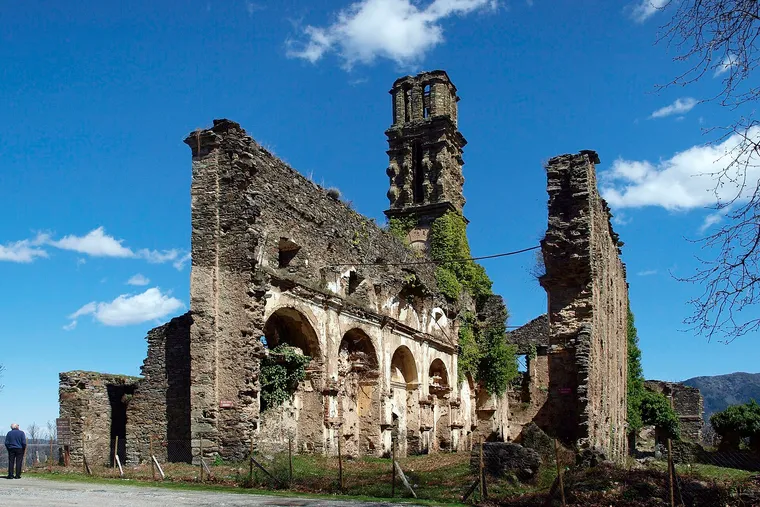
Abandoned for decades, the ruins are deteriorating fast; storms have damaged the decoration and the bell tower. The Collectivité de Corse plans to stabilize the walls, relay floors, treat the masonry for damp and give free access to the church, oratory and bell tower. It is a 2026 flagship site of the Mission Patrimoine, and first works were expected by the end of 2026.
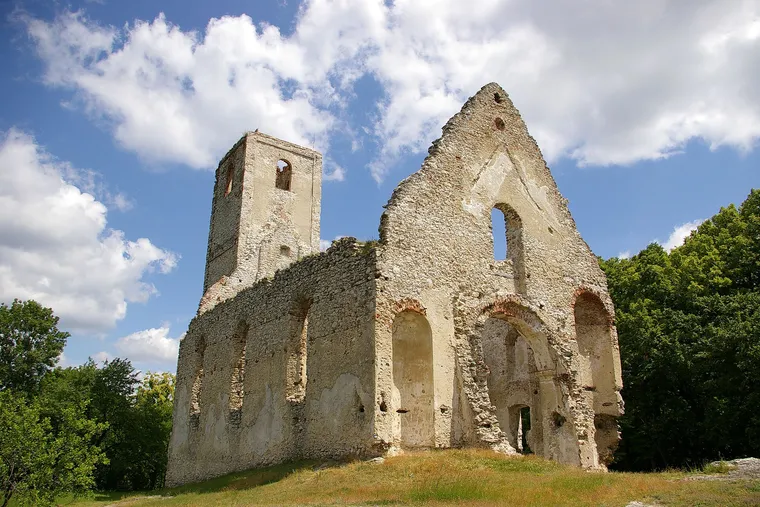
The volunteer project runs four two-week camps each summer to rebuild damaged walls and carry out archaeological research, aiming to conserve the site as a ruin rather than rebuild it. Its May 2026 appeal says support from the Ministry of Culture, which used to cover part of the costs, has ended, and asks donors to pay for the volunteers' food; its Darujme page also raises money for building materials, tools and expert supervision.
A survey found deformed masonry, large cracks, weakened buttresses and decaying wall tops in the roofless church, with vegetation speeding things up. Without prompt work parts of it, notably a wall of the north aisle, could fall. The collection opened in October 2026 and has barely started; works are due to begin at the end of 2026.
The restoration campaign says the church is in urgent need of work: the roof needs invasive repair and modification to stop moisture seeping into the adobe walls. The money is for structural stabilization of the 1843 adobe building, conservation of historic artwork and architectural details, and accessibility improvements. In October 2026 the mission was named a National Fund for Sacred Places grantee.
FAI's page on the site says the church and the old pharmacy are damaged by water infiltration and that the roofs need urgent restoration. The Ministry currently has two small Art Bonus appeals open, both almost unfunded: conserving the 13th-century lion sculpture with its pillar and stair wall, and restoring a Filippo Balbi canvas of Carthusian saints.
The nuns have no home and the roofless ruins are being damaged further by rain. An official fund run by the local community foundation pays for the nuns' housing, the securing of the structure and the rescue of surviving relics, furnishings and books, with the stated hope of rebuilding at least part of the monastery.
The east wing of the cloister has been derelict, and the Ballintubber Abbey Trust has worked since 2008 to rebuild it. Works began in 2026 on a project reported at 6.4 million euros to restore the east wing as a three-story culture and heritage visitor center and to conserve the chapter house and cloister, backed by a 5.842 million euro state grant. The abbey asks for donations to maintain and restore the abbey and its grounds and to support the new East Wing Visitor and Heritage Center.
The municipality restores the convent wing by wing with grants; the current EU co-financed stage covers part of one facade and one hall. Two public collections are open: 'Zachraň klášterní sen', to save one of the largest ceiling frescoes in West Bohemia, and a long-running collection to replace the convent's windows.
On 30 June 2026 a cooperative, Abtei Himmerod eG, was founded with the abbey's supporting association to take on the complex and keep it as a spiritual place, financing its upkeep through a mix of permanent and temporary housing, culture and visitor services. It is now recruiting members and asks for people to contribute 'ideas, commitment or capital' by buying cooperative shares.
The church is about 100 feet from the San Andreas Fault and has not been seismically retrofitted; the California Missions Foundation's 2025 annual report, published in June 2026, says it remains in need of a retrofit. The first step is seismic strengthening and roof repair of the two-story front facade (entrance, baptistry and choir loft), for which a $750,000 federal Save America's Treasures grant must be matched dollar for dollar.
The abbey's own site says the diocese is looking for a religious community to settle there and bring the chapel back to life. Meanwhile the fund is raising money to restore the site, reopen the guest house and shop, and open a training center for building trades planned for September 2027.
The sisters' foundation decided in November 2025 to pursue a sale of the whole property, because the aging community can no longer staff or pay for it. They want a buyer who will turn the complex into housing, workspace and meeting space while renting one wing back to the sisters and keeping the church as a place of worship and culture. The foundation wanted to know by the end of 2026 whether a buyer exists.
The convent and about 28 acres of grounds are for sale through Savills at a guide price of £2.2 million, with planning permission to convert the building into a single house, which indicates the community is moving on.
The walled complex is for sale: 3,782 square meters of buildings with 40 rooms on an 18,723 square meter plot, described by the agent as in good general condition. Without a buyer who values it as a monastery it is being marketed for hotel, residential or events use.
The priory buildings, two cloister galleries, press house and gatehouse stand empty in a walled park of more than five hectares and need complete renovation. A permit to convert it into a five-star hotel was granted in April 2025. A buyer with other intentions could keep it as a place of prayer and retreat.
Italia Nostra's Lista Rossa rates its condition 'pessimo': structural cracks, damp, vegetation and general abandonment, with no recovery project identified. A Tuscan agency is offering a Mugello hamlet 'with ancient abbey' matching its description, to be completely restored: about 3,200 sq m of abbey, church and lodgings, 2,500 sq m of outbuildings and 54 hectares.
The whole complex, about 10,000 square meters on a three-hectare plot, is on the market with planning approval for a hotel of about 40 rooms. The owners, six partners who bought it in 2021 from the liquidation of a foundation, could not agree on the project; a buyer could instead keep it as a sacred or cultural place.
The convent is in an advanced state of ruin and much of its contents, including most of the refectory tiles, has been lost to theft and decay. The municipality has bought nearly all of the site and in 2023 it entered the state REVIVE program, which seeks an investor to restore it under a long concession.
The monastery ranges are ruins. The Portuguese state has placed everything except the church in its REVIVE program, which grants long concessions to whoever restores a building, with about 1,679 square meters and an estimated 26 rooms.
On 6 March 2026 the monks announced they are considering leaving by 2028, citing the lack of vocations and the growing burden of the property. A plan presented in 2024 to restore the buildings and open the site to the public, estimated at 12 million euros, was dropped in 2025 for lack of backing. The Fondation du patrimoine page says the works are a condition for the community staying.
Preservation New Jersey put the abbey on its 10 Most Endangered Historic Places list in 2024 and still lists it as endangered: the old building is vacant, open to vandalism and suffering from lack of maintenance and weatherproofing, and a 2008 plan to convert it to affordable housing stalled. Separately, the monks are raising money through a Church Renovation Fund to restore the abbey church.
The roof and dome over the crossing fell in the 1970s, leaving the east end open to the weather, and Hispania Nostra put the church on its Red List in April 2025. A local association's 2026 crowdfunding closed below its minimum; the money would rebuild the structure and roof of the crossing and presbytery, then the interior.
Rain coming through the roof has brought down parts of the stucco ceiling and is damaging the upper choir stalls, the gilded organ and the paintings; the towered facade is cracked. It was shortlisted for Europa Nostra's 7 Most Endangered 2025, and in 2026 parliament asked the government for a funded restoration plan, but no works or budget have been announced.
Hispania Nostra added it to the Red List on 27 October 2026 because the bell-gable has lost part of its base, its north section has already fallen and total collapse is feared. The entry calls for immediate intervention and names no restoration project, budget or rescuer.
Status
At risk, no rescuer yet
Community
No resident community
Order
Franciscan
Founded
1507
23 more communities have announced that they are closing, merging or moving, with no appeal attached.See them on the map.