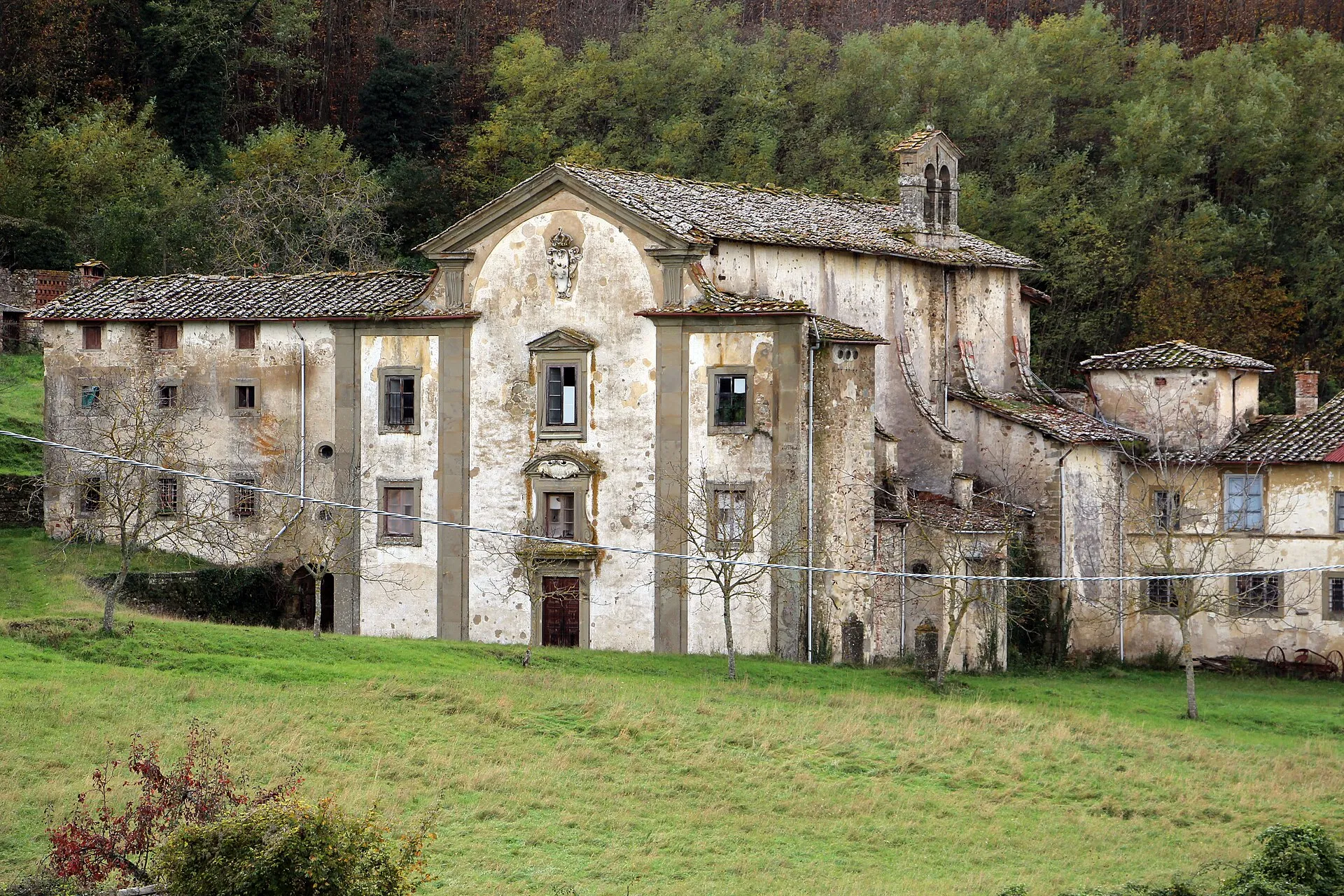
An abbey on the northern slope of Monte Senario, rebuilt in 1707-1720 by Grand Duke Cosimo III for the Trappists; it was the first Trappist house in Italy, and monks from here went on to Casamari in 1717. Suppressed in 1782, later a Camaldolese college, it was sold to private owners in 1990 and has stood closed since.
What it needs
Italia Nostra's Lista Rossa rates its condition 'pessimo': structural cracks, damp, vegetation and general abandonment, with no recovery project identified. A Tuscan agency is offering a Mugello hamlet 'with ancient abbey' matching its description, to be completely restored: about 3,200 sq m of abbey, church and lodgings, 2,500 sq m of outbuildings and 54 hectares.
Before you act. The agent's listing does not give the abbey's name in its title, but its text says the first Italian 'Trappa' was founded at Buonsollazzo and matches its history (built 1084, restored in the 18th century for the Trappists, in the hills above the Mugello); confirm with the agent. The building is protected, and restoration costs are extra and unquantified.
Last checked 9 November 2026. Parts of this entry could not be fully confirmed; see the note above. Responsible body: Apolloni & Blom Real Estate (selling agent).
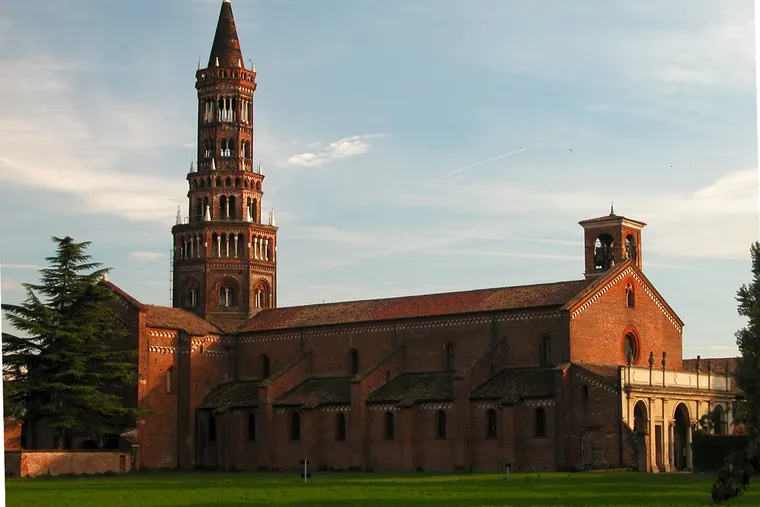
The roofs of the abbey church are degraded: tile courses are irregular and water is getting in and damaging the frescoes inside. The monks' official Art Bonus sheet prices the roof works at just over EUR 1.02 million, of which about EUR 205,550 has been donated; a second open project restores the 16th-century entrance tower.
The Agenzia del Demanio is offering it on a 6- to 50-year 'concessione di valorizzazione' to whoever presents the best project to restore and reuse it for cultural, social, civic or tourism purposes that keep it open to the public. There is no base price, only a symbolic minimum annual fee; the concessionaire funds the restoration.